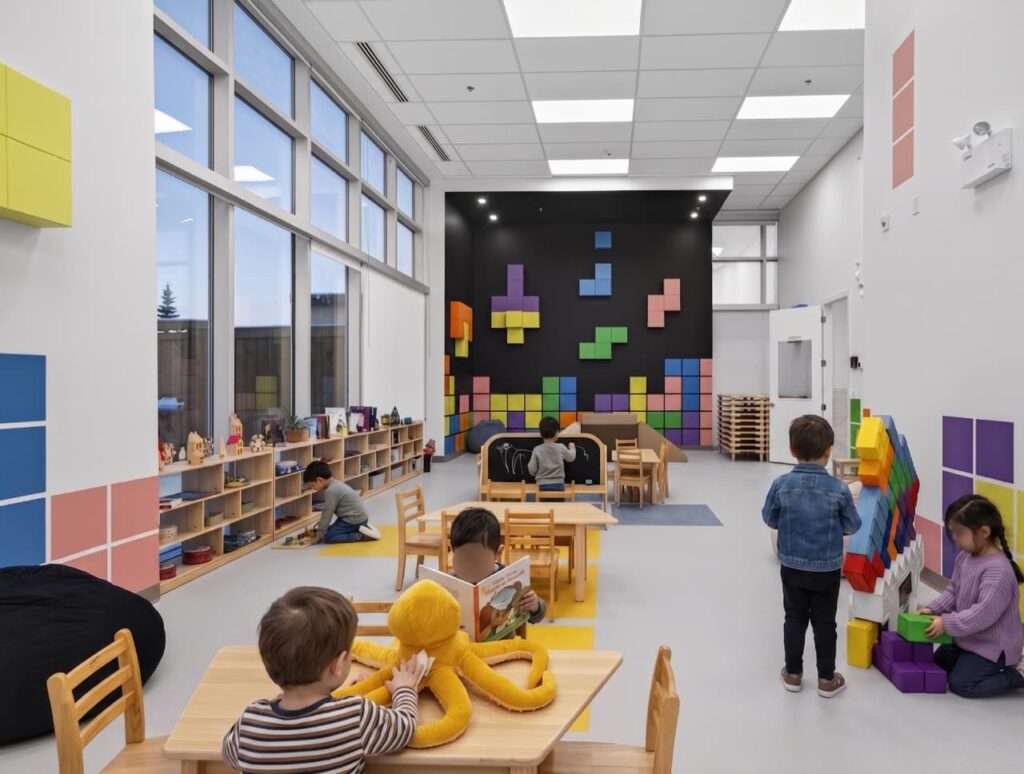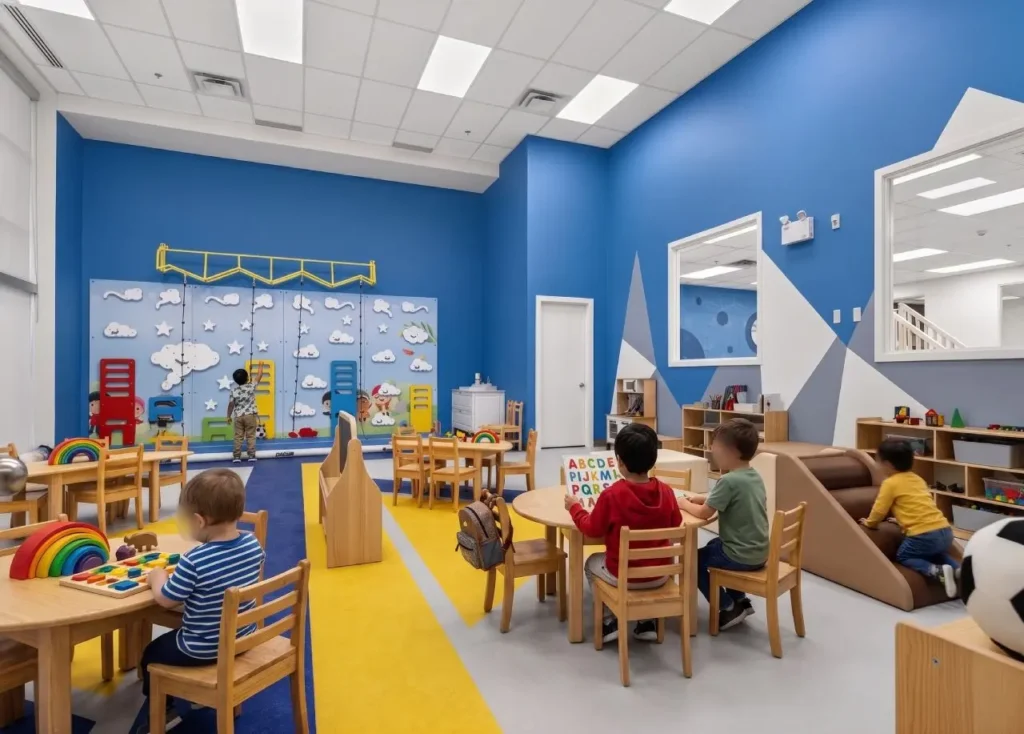
If you’re an Edmonton parent researching Montessori programs, you’re already asking the right question: what kind of early learning environment actually helps my child develop? Montessori has earned its reputation for a reason. But it isn’t the only research-informed, child-respecting approach out there — and depending on what drew you to Montessori in the first place, another method may fit your child even better.
This guide explains what Montessori is, what makes it work, and how it compares to the NTC Learning System — a neuroscience-based approach that shares many of Montessori’s values while taking a different path to get there. By the end, you’ll have a clear, honest basis for choosing.
What is Montessori?
Montessori is an educational philosophy developed by Dr. Maria Montessori in the early 1900s. Its core idea is that children learn best through self-directed activity in a carefully prepared environment, guided by trained educators who observe rather than instruct.
In a typical Montessori classroom you’ll find:
- Child-led learning — children choose their own activities and work at their own pace
- Specialized materials — hands-on, self-correcting tools (pink towers, sandpaper letters, bead chains)
- Mixed-age groupings — usually in three-year spans, so children learn from one another
- Prepared environments — calm, orderly, low to the ground, designed for independence
- Practical life skills — pouring, buttoning, cleaning, caring for the space
The appeal is real: Montessori respects children as capable individuals, fosters independence and concentration, and avoids the early academic pressure that worries so many parents.
What is the NTC Learning System?
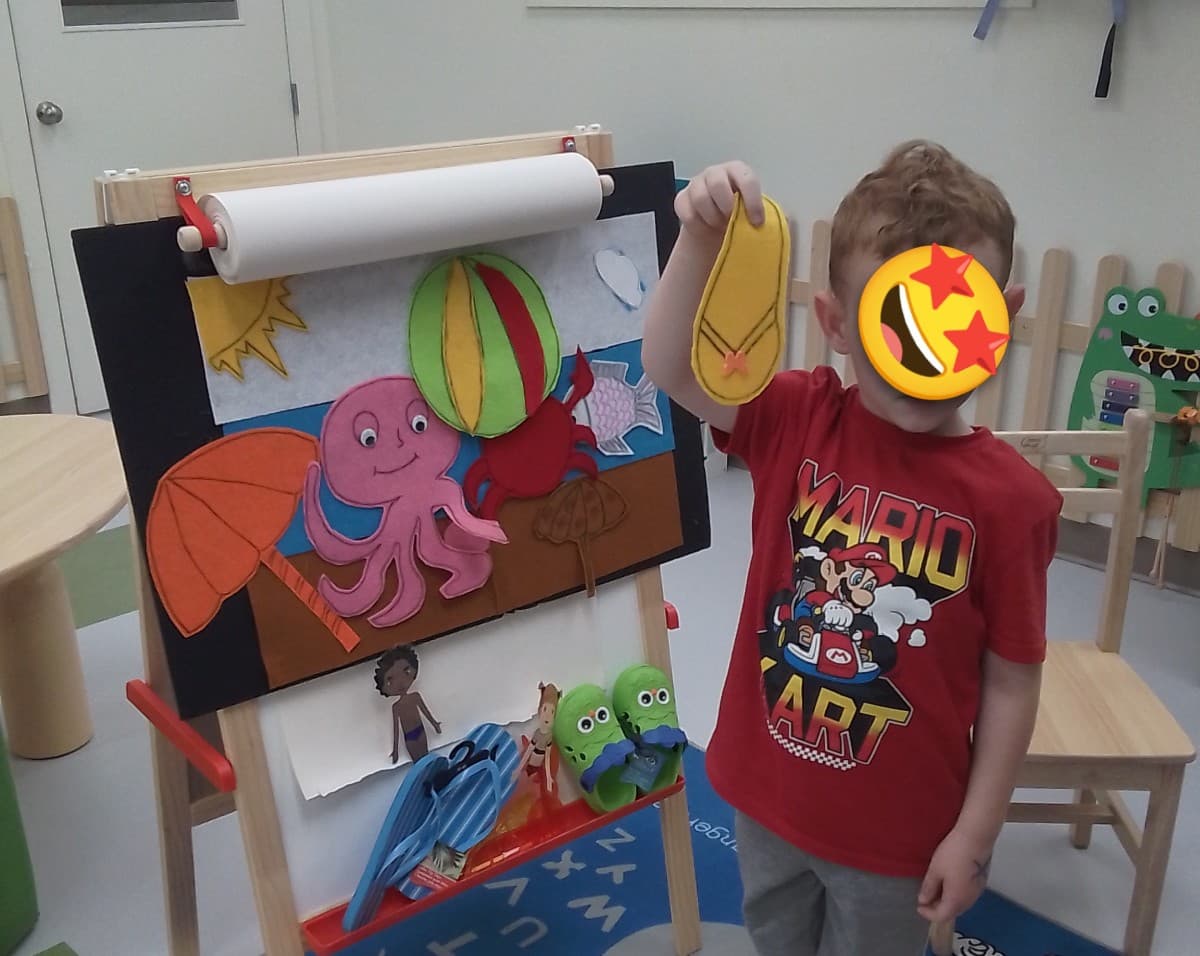
The NTC Learning System is a more recent framework developed by Dr. Ranko Rajović, a physician and founder of Mensa Serbia who now heads the Department of Neuroscience in Education at the Faculty of Education in Koper, Slovenia. In 2016 the program received Mensa International’s Intellectual Benefit to Society Award.
NTC starts from a simple premise grounded in brain science: the early years are when the brain forms neural connections most rapidly, and the right kinds of play and movement help build a foundation for attention, reasoning, and functional knowledge later in life.
Like Montessori, NTC is play-based and avoids early academic drilling. But its method is built specifically around three pillars:
- Movement and motor development — rotation, balance, running, skipping, ball play. NTC treats physical movement as essential brain-building, not just exercise.
- Abstract symbol recognition — using everyday symbols like flags, car logos, and shapes through memory games and puzzles to develop the brain’s classification abilities.
- Functional thinking and associations — questions and games that connect ideas in unexpected ways, encouraging children to reason rather than memorize.
NTC also explicitly aligns itself with the principles you’ll recognize from Canadian early learning frameworks: play- and inquiry-based learning, holistic development, inclusion and belonging, and developmentally appropriate practice. Rather than replacing a provincial curriculum, it layers a neuroscience-informed method on top of it.
Montessori vs. NTC: a side-by-side comparison
| Montessori | NTC Learning System | |
|---|---|---|
| Origin | Dr. Maria Montessori, early 1900s | Dr. Ranko Rajović, neuroscientist, 2000s |
| Core idea | Self-directed learning in a prepared environment | Brain-friendly play that builds neural connections |
| Driving framework | Educational philosophy & observation | Contemporary neuroscience research |
| Role of movement | Present (practical life, gross motor) | Central — rotation, balance, and movement are foundational |
| Materials | Specialized, self-correcting Montessori materials | Everyday symbols, games, puzzles, riddles |
| Pace | Child sets the pace | Child-led, with adult-introduced “thinking games” |
| Focus on giftedness | Not a stated focus | Explicit emphasis on developing each child’s potential |
| Academic pressure | Avoided | Avoided |
| Fits Canadian early learning frameworks | Yes | Yes — explicitly designed to align |
The takeaway: these are not opposites. They’re two thoughtful answers to the same question, and they overlap more than they differ.
Where Montessori and NTC agree
If you’re drawn to Montessori, it’s worth knowing how much NTC shares with it:
- Children are capable, not empty vessels. Both reject rote, reproductive learning in early childhood.
- Play is the work of childhood. Neither pushes worksheets or flashcards on three-year-olds.
- The environment matters. Both are intentional about what surrounds the child.
- Respect for natural development. Both follow the child’s developmental readiness rather than an arbitrary timetable.
So the question for most Edmonton families isn’t “Montessori or not?” — it’s “Which of these compatible philosophies fits my child and my values best?”
Why parents drawn to Montessori often connect with NTC
Here’s the honest version. Montessori’s strength is its prepared environment and beautiful, specialized materials. Its limitation, for some families, is that a fully authentic Montessori program can be expensive, rigid about method, and quieter on the role of vigorous physical movement.
NTC tends to resonate with Montessori-minded parents who want:
- More movement. If your child is physical, active, and learns by doing, NTC’s emphasis on rotation, balance, and motor play may suit them especially well.
- A clear “why.” NTC is explicit about the brain science behind each activity, which appeals to parents who want to understand the reasoning, not just the routine.
- Everyday, transferable games. Many NTC activities — guessing car brands on a road trip, spotting flags, solving association riddles — are easy to continue at home, no special materials required.
- An explicit focus on potential. NTC was built partly to help every child express their abilities, including children who think quickly and associatively and can get overlooked in conventional settings.
None of this means Montessori is “wrong.” It means that if the values that attracted you to Montessori are independence, respect for the child, and play over pressure, you may find NTC delivers them through an approach that fits your family’s day-to-day life.
NTC at Grand Daycare in Edmonton
At Grand Daycare, we bring the NTC Learning System into everyday play for children in our Edmonton program. That means daily movement and balance activities, symbol and memory games, association riddles, mixed indoor/outdoor play are all delivered by our educators, and are fully aligned with Alberta’s early learning expectations.
The best way to understand the difference is to see it. Schedule a tour and watch how brain-friendly play looks in practice.
Frequently asked questions
Is NTC a replacement for Montessori?
No. They’re separate approaches that share many values. NTC can stand on its own or complement other play-based methods, and it’s designed to fit within Canadian early learning frameworks rather than replace a curriculum.
Is NTC scientifically supported?
NTC describes itself as neuroscience-based and reports evaluation through international projects, peer-reviewed research, and graduate theses. As with any educational method, parents should review the evidence themselves and choose what fits their child. We’re happy to talk through it on a tour.
My child is very active, which approach is better?
Highly physical children often thrive with NTC’s strong emphasis on movement, rotation, and balance as part of learning. That said, many active children do well in Montessori too. Visiting in person is the best way to judge fit.
Is there a Montessori daycare in Edmonton, or only NTC?
Edmonton has a range of programs, including dedicated Montessori centres. Grand Daycare offers an NTC-based program for families who want a neuroscience-informed, movement-rich, play-based alternative. Before making a decision, don’t forget to check your daycare is licensed with Alberta Childcare Lookup tool.
At what age should we start?
Brain development is most rapid in the earliest years, so both approaches emphasize starting young. NTC is designed for children from birth to age 12, with the early preschool years being especially formative.
Choosing what’s right for your child
Montessori and NTC both reject early academic pressure, both trust children, and both treat play as serious developmental work. If you’ve been researching Montessori in Edmonton, you already value those things and that’s exactly why NTC is worth a look.
The honest advice: tour both. Watch how the educators interact with children, how much the children move, and whether your child lights up. Book a tour of Grand Daycare to see the NTC approach for yourself.